

Scaffolding Hire in Stroud
GV Scaffolding is a local scaffolder providing planned access solutions for residential and commercial projects throughout Stroud, with advice shaped around each building, work programme, and site.
How a Scaffolder Matches the System to the Project
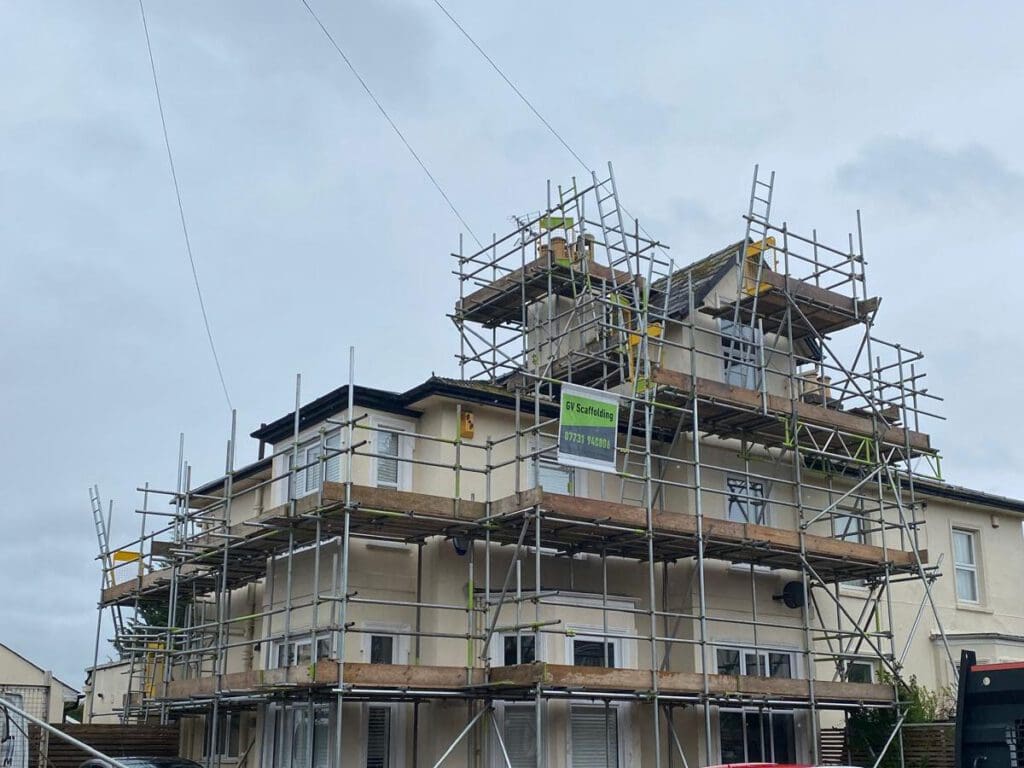
Choosing the right structure begins with understanding what the project requires. A scaffolder should assess the working height, building layout, loading, access restrictions, ground conditions, and activity around the site before recommending a system. GV Scaffolding provides scaffolding hire services for clients in Stroud, Cheltenham, Cirencester, Tetbury, and the surrounding areas, and advises on both residential and commercial scaffolding, temporary roofs, birdcage scaffolding, and bespoke scaffolding solutions for a variety of properties.
Each structure has a particular purpose. A house extension may require straightforward external access, while a shop refurbishment could involve customer entrances, neighbouring premises, deliveries, and public routes. Internal ceiling work needs a different arrangement from roofing, structural alterations, or maintenance across an extensive elevation.
The planned work should determine the platform levels, loading, access points, and hire period. Considering these details at the outset helps coordinate the scaffold with builders, roofers, decorators, electricians, and other trades using it.
1. Assessing the Scope of the Work
Begin by identifying the areas that tradespeople need to reach and the tasks they will complete. The property type is relevant, but the work itself often provides the clearest guide to the required arrangement.
Common options include:
- Commercial scaffolding for offices, shops, hospitality venues, warehouses, and public buildings
- Temporary roofs for exposed roofing, extension, renovation, and structural work
- Birdcage scaffolding for high ceilings, soffits, roof structures, and broad internal working areas
- Bespoke scaffolding for unusual elevations, heritage features, restricted sites, and complex layouts
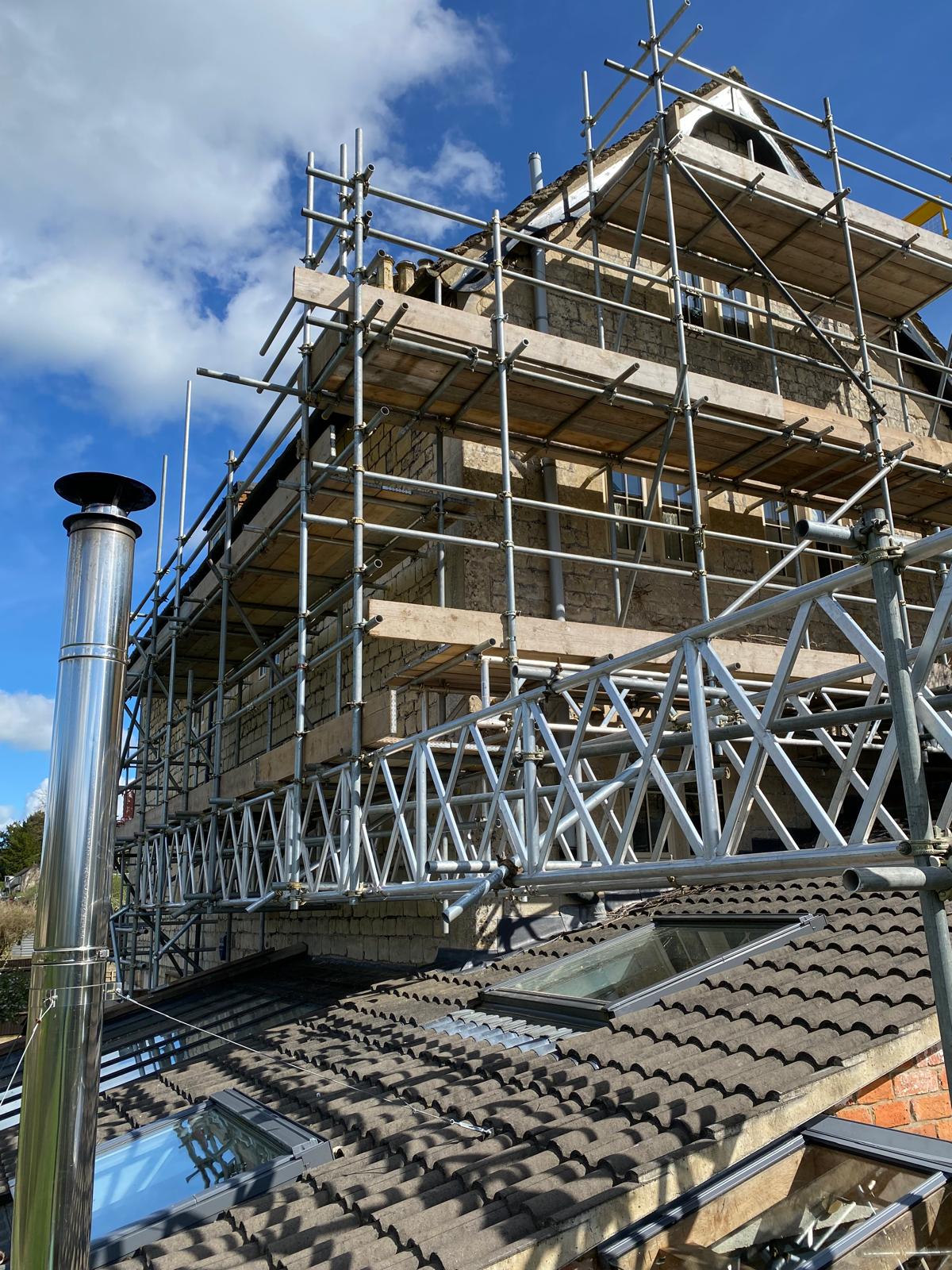
- Cantilever scaffolding where part of the platform cannot be supported directly from below
- Towers or other localised systems for suitable short-duration or limited-area tasks
One project may use several arrangements as the work progresses. Discussing the construction sequence early allows access to be provided where each trade needs it.
Domestic work may also require access around conservatories, garages, garden rooms, or adjoining extensions. Business sites may have plant, signage, loading areas, or ongoing operations to consider. These details help define a practical layout that supports the work without overlooking how the property is used each day.
2. Planning Scaffolding Hire Around the Site
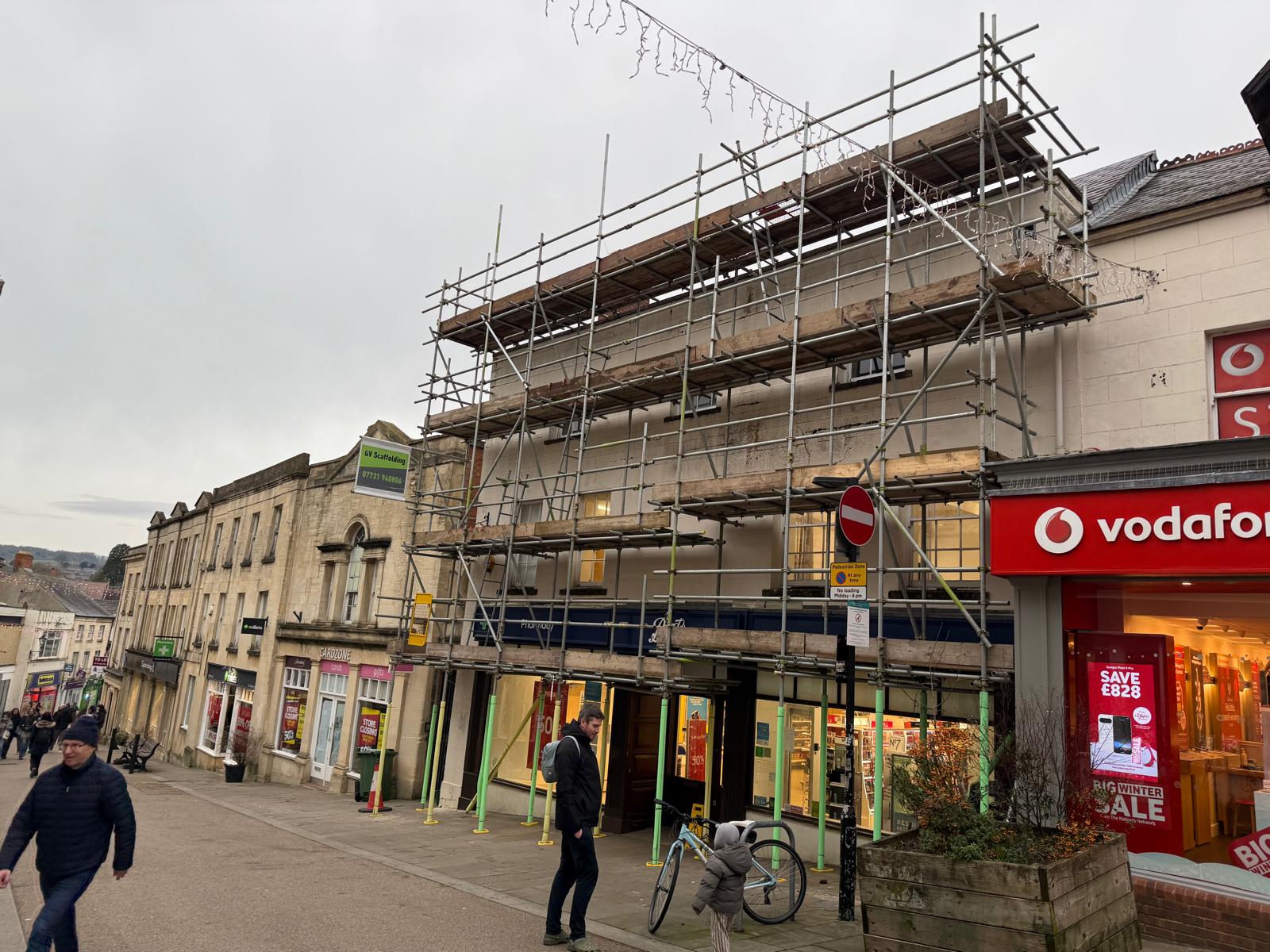
Site conditions can influence how a scaffold is positioned, tied, accessed, and dismantled. Narrow paths, sloping ground, conservatories, extensions, neighbouring boundaries, entrances, and vehicle movements should be identified before erection. Our scaffolders can then plan the standards, access points, and working levels around these restrictions.
Occupied homes and operational business premises also require practical planning. Safe access to doors, agreed delivery routes, emergency exits, and separation from customers or residents may need to be maintained. The quotation should explain the proposed service, agreed hire period, dismantling, and any separate requirements for alterations, design work, or highway permissions.
3. Birdcage Scaffolding for Internal Work
A birdcage structure uses a grid of standards, ledgers, and transoms to support a boarded platform across an internal area. It can give several trades continuous access at one principal working height instead of restricting them to a smaller tower or isolated platform.
Birdcage scaffolding is commonly used for plastering, painting, electrical installation, ceiling repair, roof structures, and work beneath soffits. Room dimensions, platform height, intended loading, floor capacity, and internal obstructions all affect the final configuration. Larger or unusual arrangements may require additional design input before installation.
4. Commercial Scaffolding for Working Premises
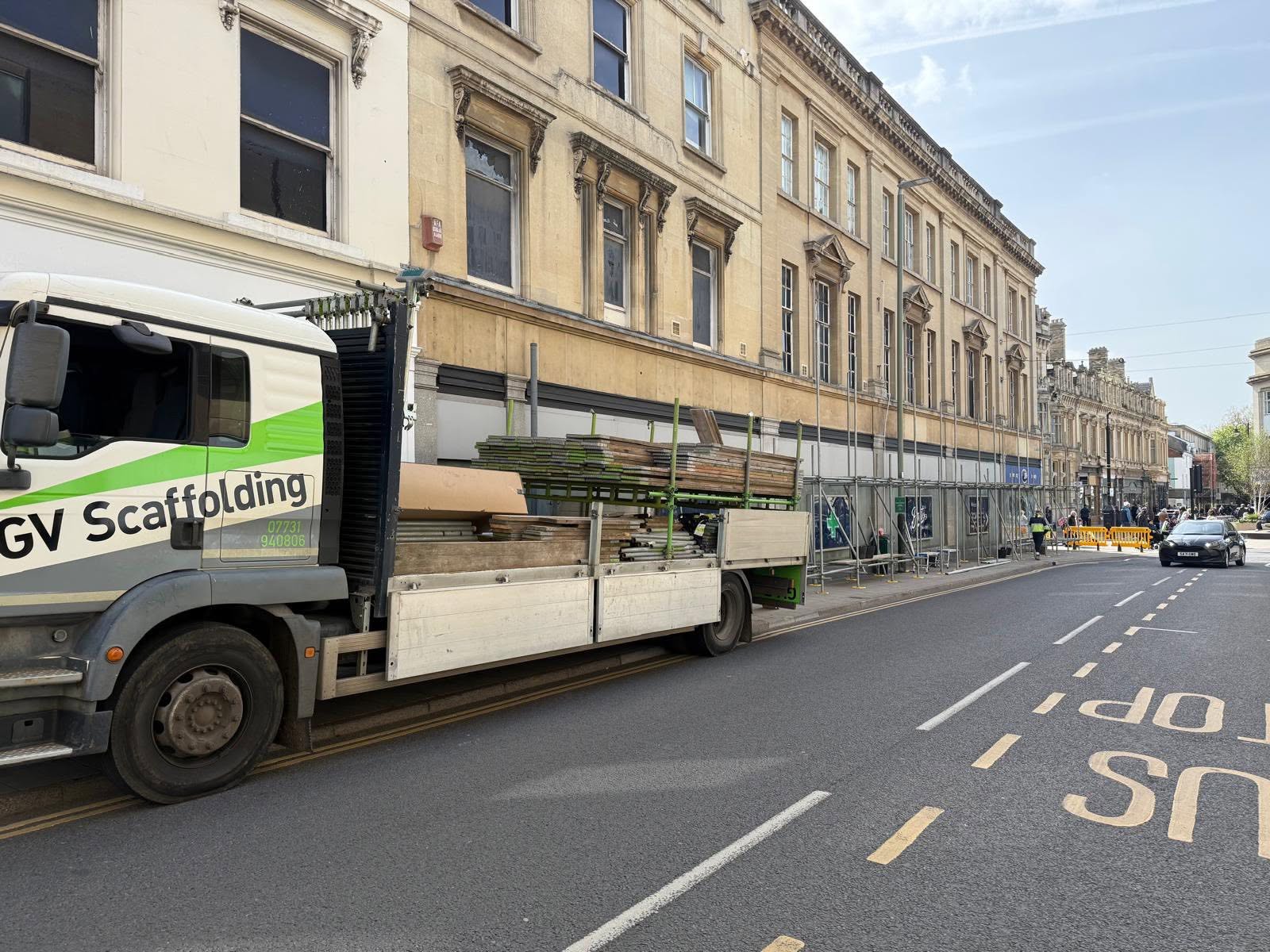
Across Stroud, business properties introduce considerations that may not arise on an unoccupied domestic site. Entrances, staff routes, deliveries, customer access, working hours, and emergency exits can all influence the layout and erection programme.
Commercial scaffolding can be phased around refurbishment, repair, maintenance, or construction work where the building and programme allow. Early coordination with the business owner, contractor, facilities manager, or site manager helps establish which areas must remain accessible and when different working platforms will be required.
5. Temporary Roofs and Bespoke Scaffolding
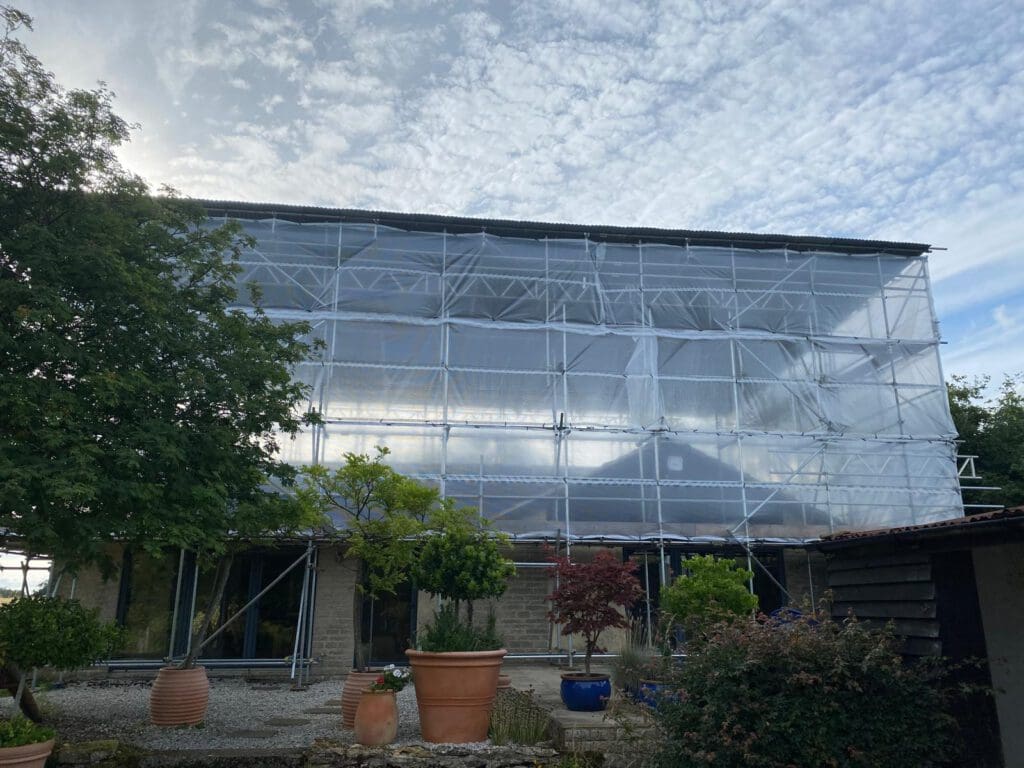
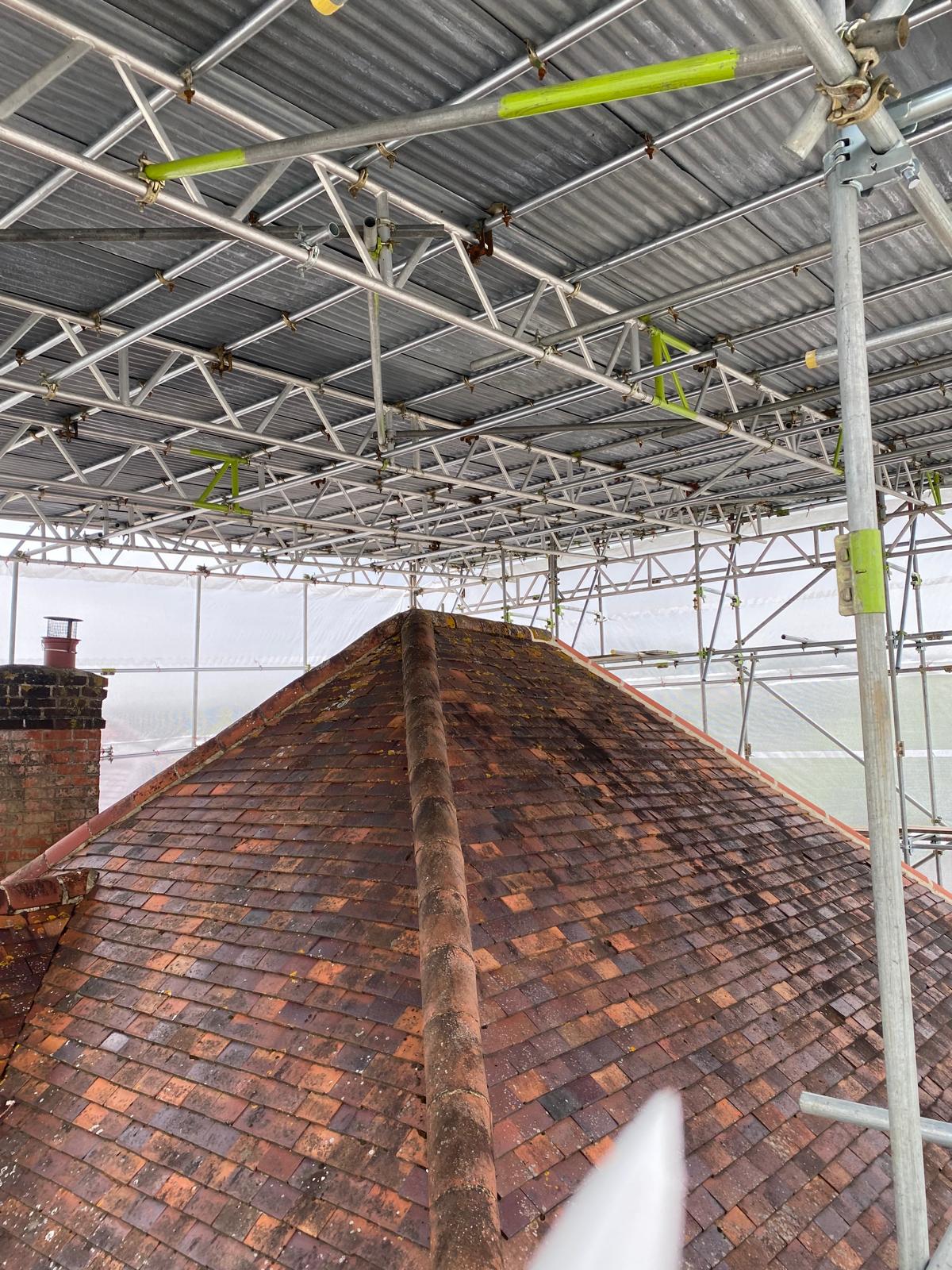
Exposed buildings may need a covered structure while roofing, structural work, or extensive renovation is underway. The required span, supporting scaffold, anticipated weather exposure, covering, and length of the project influence how the protection is planned.
Temporary roofs help limit rain entering vulnerable areas, although the proposed level of protection should be discussed before work begins. Severe conditions may still require work to pause or the structure to be checked.
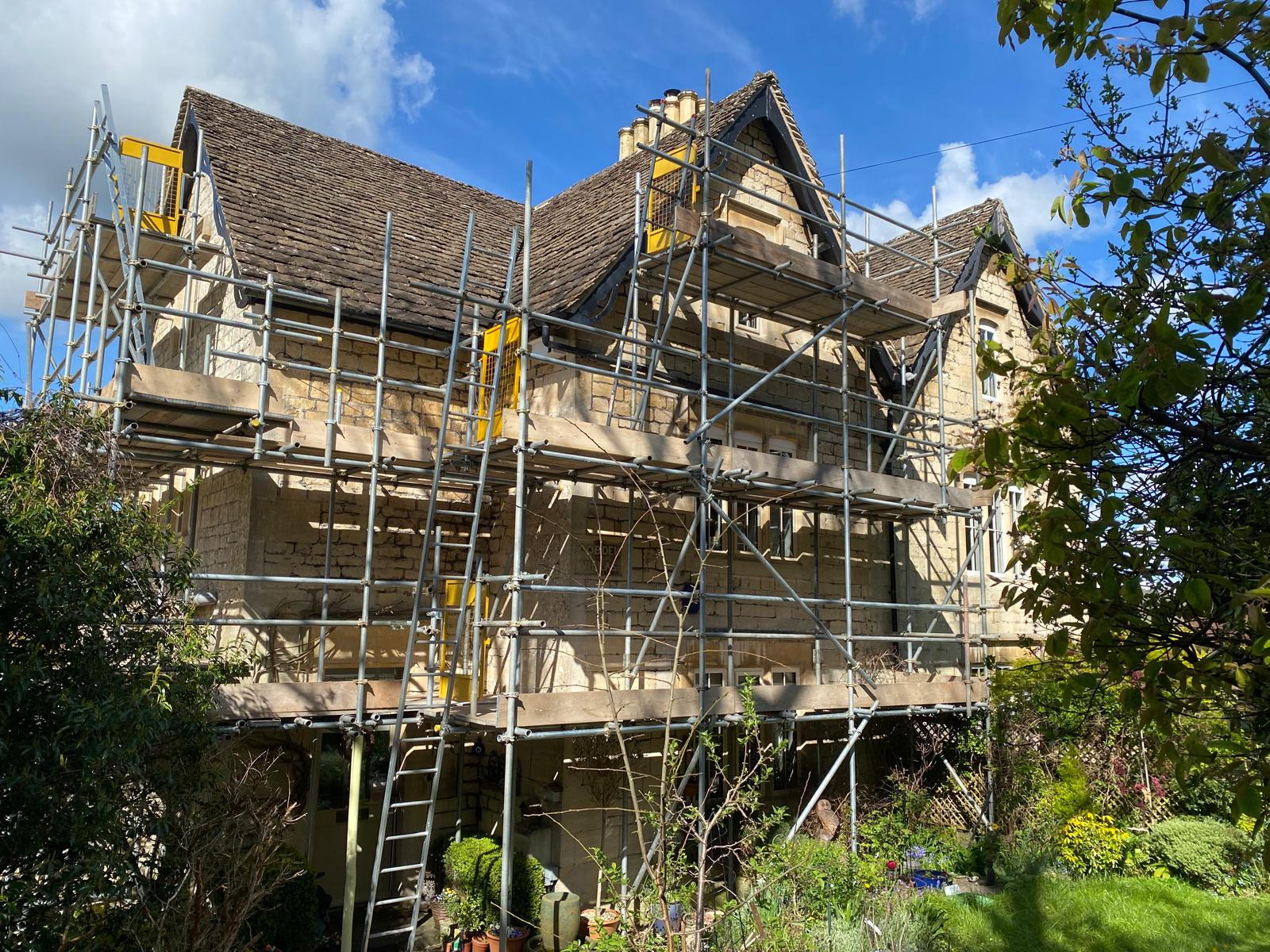
Bespoke scaffolding provides an alternative where a recognised standard arrangement cannot accommodate the building or access requirements. Curved elevations, fragile features, restricted support positions, bridges, heritage properties, and unusual loading can all require a project-specific solution.
A GV scaffolder can assess these constraints and establish whether a standard configuration or project-specific design is appropriate.
6. Safety, Design, and Inspection Requirements
Construction scaffolds should be erected, altered, and dismantled by people with the appropriate competence. Some configurations follow recognised guidance, while complex structures require calculations and drawings coordinated for the project. Our scaffolders must ensure the erected arrangement follows the relevant design information and intended use.
Scaffolding should be inspected before first use, at least every seven days, and following substantial alterations or conditions that could affect its safety. GV Scaffolding incorporates these requirements into its scaffolding hire planning and communicates the necessary information to the appropriate site contact.
Before accepting a quotation, confirm what the service includes, who will arrange inspections, how alterations will be requested, and when dismantling is expected. Clear responsibilities help prevent unauthorised changes and keep the structure aligned with the programme.
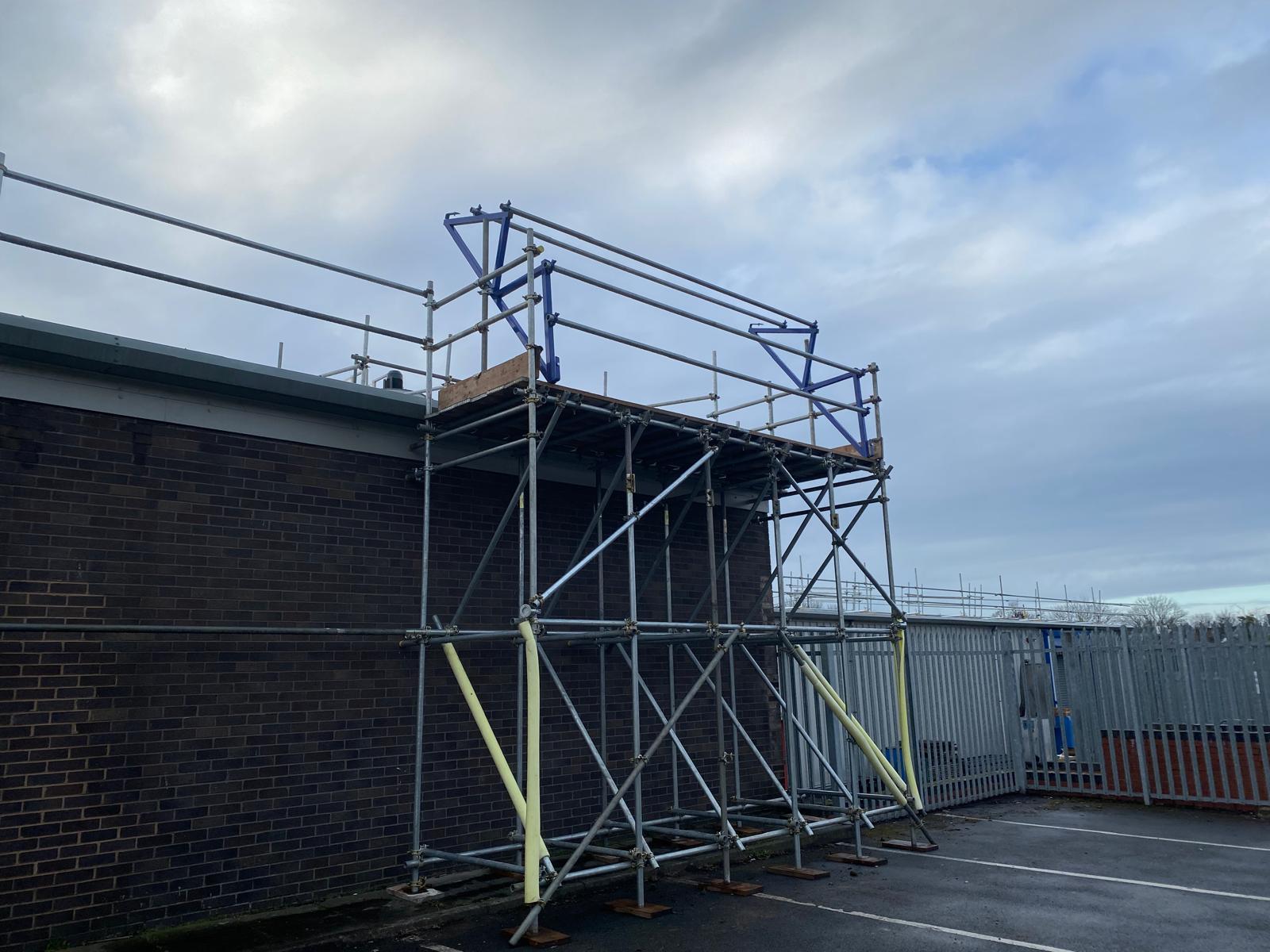
Call Us Today for Scaffolding Services in Stroud
For scaffolding hire in Stroud and the surrounding areas, contact GV Scaffolding, your local scaffolder, on 07731 940806. We can assess your project and recommend residential and commercial scaffolding, temporary roofs, birdcage scaffolding, or bespoke scaffolding suited to the building and proposed work.