

Temporary Roofs in Cirencester
GV Scaffolding provides temporary roofs for construction, renovation, and repair projects requiring protection from rain and changing weather. Our weather protection scaffolding can cover exposed roof areas, extensions, building interiors, and materials while work is underway. Temporary roof structures are available for residential, commercial, heritage, and public-sector projects across Stroud, Cheltenham, Cirencester, Tetbury, and the surrounding areas of Gloucestershire.
Providing Reliable Cover for Your Project
A temporary roof must be planned around the building, proposed work, required span, supporting scaffold, anticipated loading, and surrounding environment. An experienced scaffolder will also consider the intended hire period, access required beneath the covering, and how different stages of the project may affect the structure.
GV Scaffolding plans temporary roofing for projects across Stroud, Cheltenham, Cirencester, Tetbury, and the surrounding areas. Applications range from residential roof replacements and extensions to larger refurbishments and commercial construction work.
Our scaffolding hire service can include the supporting access scaffold, covered working area, erection, agreed alterations, hire period, and dismantling. Each proposal is developed around the site and programme so that roofers, builders, and other trades have suitable access while exposed areas receive an appropriate level of protection.
Temporary roofing is intended to reduce exposure to weather rather than guarantee that work can continue in every condition. Severe wind, heavy rain, snow, or other adverse weather may still require work to stop or the structure to be checked before use resumes.
What is Temporary Roof Scaffolding?
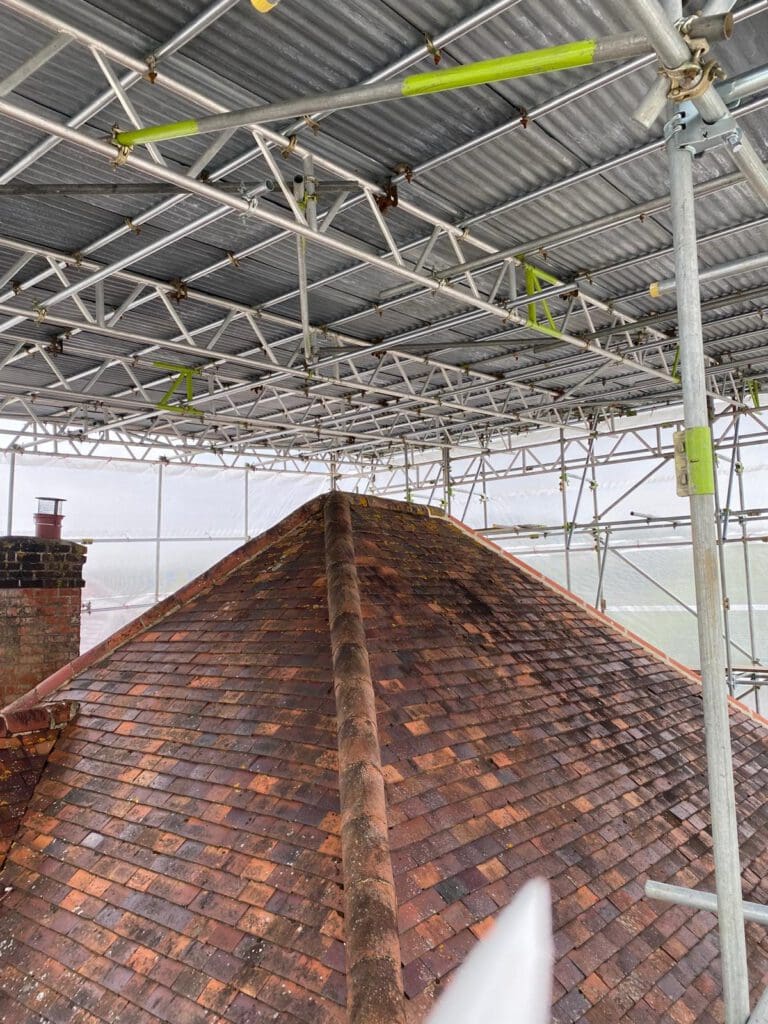
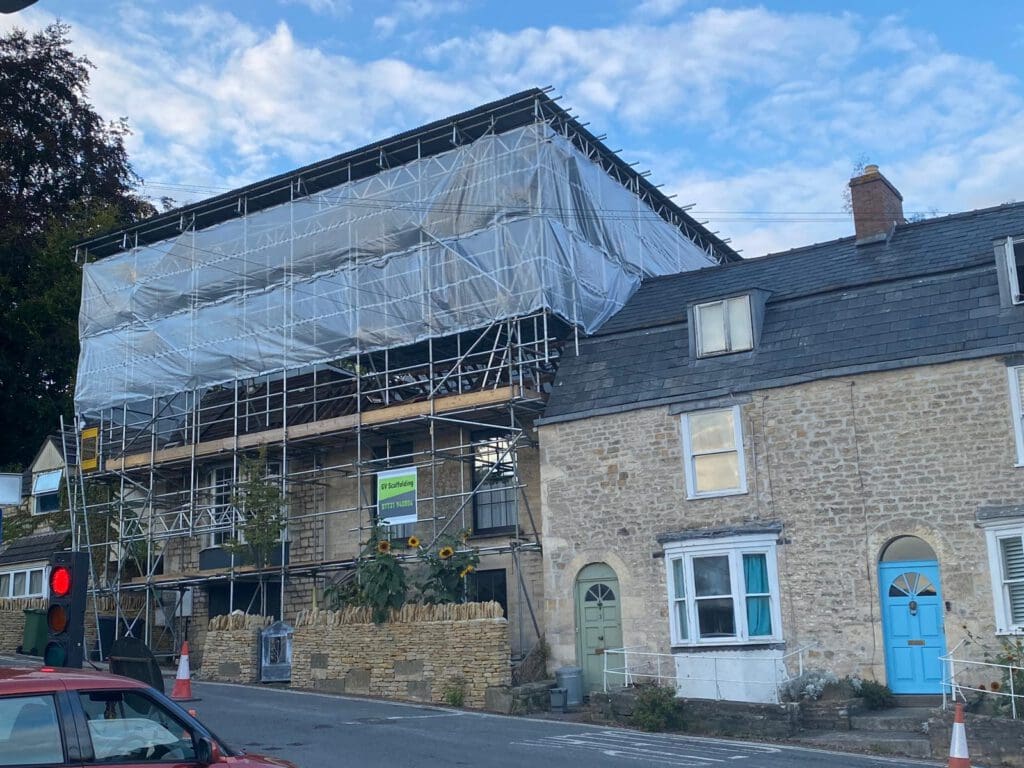
This form of scaffolding creates a covered temporary works structure over an exposed building or working area. It normally combines a supporting scaffold with roof beams, bracing, and a weather-resistant covering. The precise components and configuration depend on the building, roof span, site conditions, expected exposure, and work taking place underneath.
Weather protection scaffolding is commonly used during roof replacement, structural alterations, loft conversions, extensions, fire or storm-damage repairs, and extensive refurbishment. It can help protect the property and working area from rain while allowing controlled access beneath the covering.
Temporary roof structures require careful planning because coverings can be affected by wind pressure and uplift. Where project-specific design is required, the relevant calculations and drawings must be prepared by a competent designer before erection. A qualified scaffolder must then follow the approved arrangement during installation and any subsequent alteration.
Sometimes referred to as fake roofs, these temporary structures cover exposed areas while a permanent roof is repaired, replaced, or constructed. The supporting scaffold and protective covering are planned together, providing suitable access for tradespeople while helping to limit rain entering the building below.
When Does a Project Need Temporary Roofing?
Temporary roofs may be suitable when the work area will be left exposed during construction, repair, or refurbishment. The need for a covering will depend on the building, season, programme, condition of the existing roof, and potential consequences of water entering your property.
Common applications include:
- Temporary roofs for major repairs and complete roof replacements
- Temporary roof structures for extensions, loft conversions, and new construction
- Weather protection scaffolding for exposed refurbishment and structural work
- Temporary roof scaffolding for commercial, residential, and heritage properties
- Fake roofs for protecting exposed areas during repair, renovation, and construction work
- Long-term covered access for phased construction programmes
GV Scaffolding provides temporary roofing for homes, churches, office buildings, schools, and other properties across Stroud, Cheltenham, Cirencester, Tetbury, and the surrounding areas. The building and proposed work will be assessed before one of our scaffolding specialists recommends the appropriate span, covering, supporting structure, and access arrangement.
Weather Protection Scaffolding for Urgent and Planned Projects
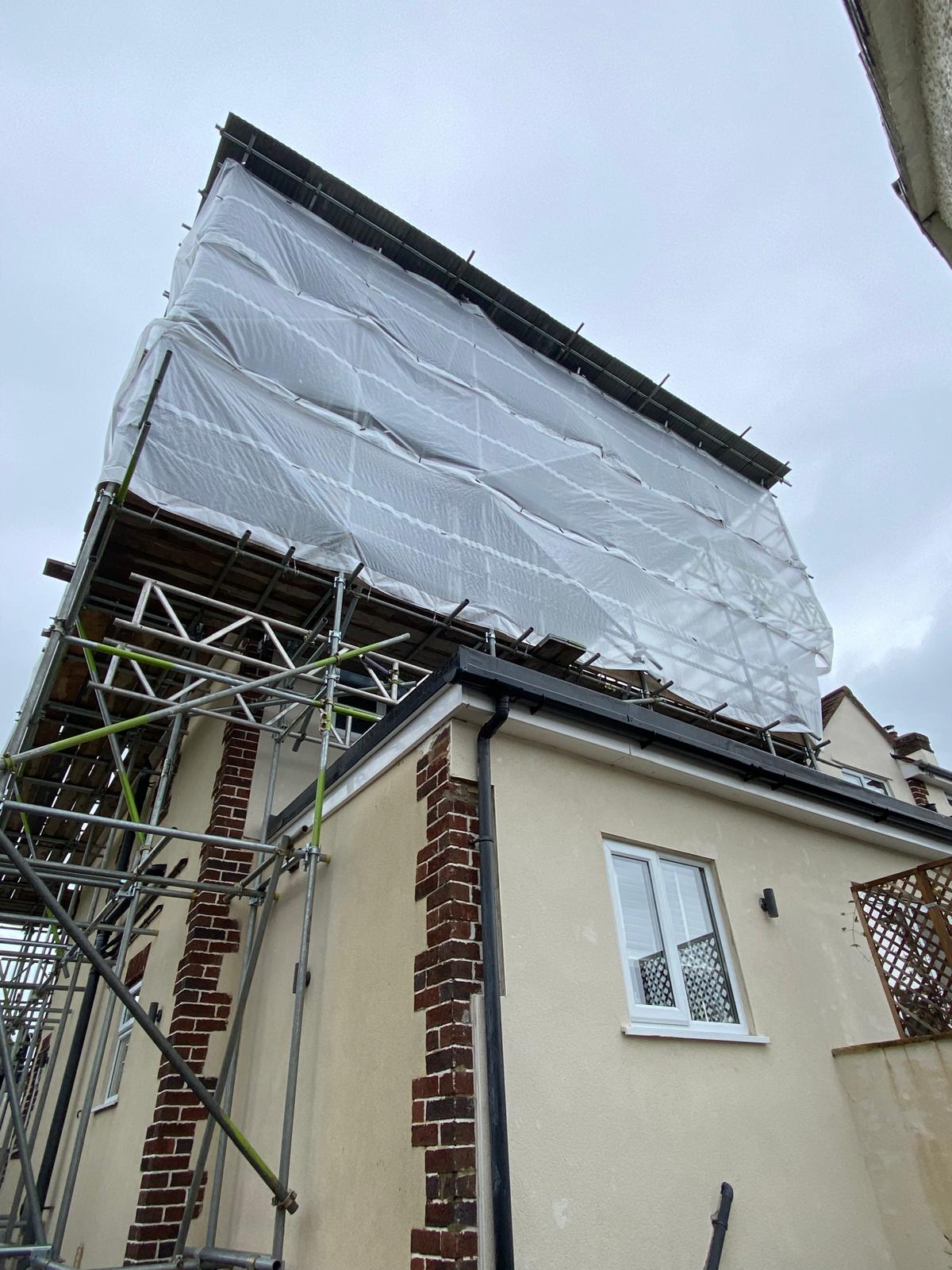
Temporary roofing may be required at short notice following storm damage, leaks, fire damage, or unexpected problems uncovered during construction. GV Scaffolding will discuss the urgency, condition of the property, access restrictions, and work required before confirming what can be provided and when installation can take place.
Projects can range from localised domestic repairs to extensive coverings for large buildings. Where the structure, exposure, or roof span creates additional demands, appropriate design input will be coordinated before erection. Our scaffolders will also consider how materials, workers, and equipment need to move beneath the covering.
We regularly provide temporary roofing across Stroud, Cheltenham, Cirencester, and Tetbury for:
- Roof replacements and loft conversions
- House extensions and exterior building work
- Commercial sites, including offices and schools
- Heritage-property repairs and restoration
- Storm-damaged roofs and urgent protection requirements
Our temporary roofing services can provide:
- Weather-resistant coverings over exposed areas
- Supporting scaffolding for short- or long-term projects
- Planned access for roofers and construction teams
- Custom designs for unusual, exposed, or large structures
- Agreed alterations as different project phases progress
- Dismantling and removal after completion
Installation speed will depend on the size, complexity, design requirements, site access, materials, and current workload. GV Scaffolding will provide a realistic programme rather than promising that every temporary roof can be erected within the same timescale.
FAQs – Temporary Roofs
A temporary roof may be needed when roofing, renovation, extension, or structural work will leave a building exposed to rain and changing weather. It can protect internal areas, building materials, and unfinished work during short or phased projects.
GV Scaffolding reviews the building, programme, anticipated exposure, and access requirements before recommending temporary roof scaffolding suited to the property and proposed work.
A properly planned temporary roof can provide substantial protection from rain, although it should not be treated as a guarantee that the building will remain completely watertight. Performance depends on the covering, roof shape, joints, drainage, wind exposure, and condition of the structure.
Water management forms part of the planning, and vulnerable interiors, materials, or equipment may require additional protection throughout the work.
Temporary roofs must be planned for foreseeable weather effects, including wind pressure and uplift. The required design will depend on factors such as location, span, height, roof shape, covering, supporting scaffold, and anticipated exposure. Severe weather may still require work to stop and the structure to be checked.
Our project planning accounts for the site conditions and relevant design information before installation.
Yes, temporary roof structures can remain in place for longer refurbishment and construction programmes when they are designed, installed, maintained, and inspected for the intended period. The hire arrangement should account for seasonal weather, planned alterations, access needs, and changes to the building beneath it.
GV Scaffolding can coordinate the covering with different project phases and agree any required scaffold alterations.
Yes. “Fake roofs” is an informal name sometimes used for temporary roofs erected over construction, repair, or refurbishment work. They combine a supporting scaffold with a protective covering planned around the building, anticipated weather, access requirements, and work taking place beneath it.
GV Scaffolding will identify the appropriate temporary roof structure for the project, regardless of which term is used during the initial enquiry.
The design is influenced by the required span, roof profile, supporting scaffold, ground conditions, intended covering, wind exposure, access requirements, and length of the project. The designer may also need information about the permanent building and planned construction sequence.
Following a site assessment, we can confirm the proposed arrangement and coordinate project-specific calculations and drawings where these are required.
Contact Our Scaffolders Today
If you need a temporary roof for your project in Stroud, Cheltenham, Cirencester, Tetbury, or the surrounding areas, contact GV Scaffolding to discuss the building and proposed work. Call 07731 940806 to arrange an assessment and obtain advice from an experienced scaffolder about temporary roof structures, weather protection scaffolding, and our other scaffolding services.